
The battery data and simulation layer
Faster build-test-learn loops for your battery programs.
Ionworks turns your test data into validated physics-based models, so your team answers design questions before the next build. Built by the creators of PyBaMM.
Trusted by


Avrion screened 5,800 cell designs in software and built 19.
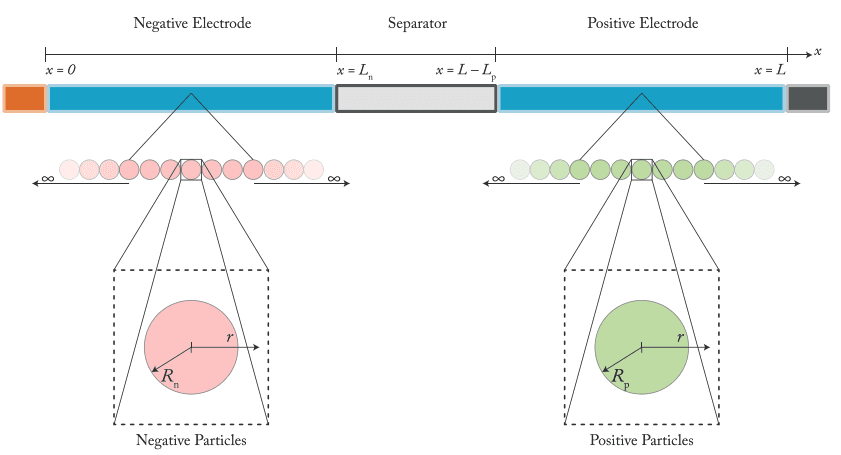
A DFN model, parameterized from a few baseline 1 Ah pouch cells, searched electrode loadings and press densities for an eVTOL mission profile. Avrion Battery Labs built only the top candidates, and test data recalibrated the model after each build loop.
Download the Avrion case studyPDF- Specific energy, measured
- +21%
- High-power landing design against the baseline cell, measured on built cells.
- Faster per design program
- 5 months
- Two build loops instead of four, once the chemistry is parameterized.
- Saved across ten programs
- $930K/yr
- $93K per program in avoided build rounds, with pilot-line capacity freed.
Savings are modeled, not measured: ten programs a year, three design parameters per program, and two build rounds saved per program.
Estimate the return for your teamIn their words

Ionworks has been an exceptional partner, bringing deep expertise, responsiveness, and a genuinely collaborative approach to how we move from materials innovation to real-world cell performance.See how we work with materials teams

Now it's plug and play. I want to change this parameter, I change it, I go. I'm not losing time fixing the software. You buy Ionworks and you're three, four years ahead.Read the FAAM case study

Ionworks took an open-ended problem and helped us to quickly identify the best course of action, delivering a tailored model of our system. The team adapted flexibly as the problem statement developed.Discover our custom modeling services

Collaborating with Ionworks enables our customers with tools and insight that support faster development and more predictable outcomes.Read the collaboration announcement

Ionworks gives our customers the tools to reduce their development time and cost to implement Iontra Charge Control protocols in their products.Read the Iontra announcement

The sessions were packed with practical examples and tailored exactly to our needs. The best part was the technical depth: the trainers shared a lot of in-depth battery knowledge in between the coding.See the training programme
Built by the team behind PyBaMM
Ionworks was founded by the creators and maintainers of PyBaMM, the open-source battery modeling package used across academic and industrial R&D.
Ionworks Studio brings that electrochemical depth into the lab. Operate runs the work around each test, and Simulate turns your team's test data into validated models, design sweeps, and engineering decisions you can defend.
Where the loop loses time
Battery R&D teams need software that understands the structure of battery data, protocols, and models across the whole loop, from planning a test to deciding what to build next. Not a generic simulation platform that promises speed and optimization in the abstract.
The challenge
Scattered cycling data
Results live across shared drives, email, and vendor-specific file formats. Nobody is sure which file is current or which cycler produced it.
What Ionworks does
One system of record
Every measurement is normalized, linked to its cell spec and experimental context, and searchable. Ionworks reads Maccor, Neware, Novonix, Arbin, BioLogic, and BasyTec natively. The data layer stands alone or feeds parameterization and simulation.
The challenge
Protocol rewriting and data egress
With thousands of protocols and no easy way to compare them, engineers rewrite tests from scratch. Then every new cycler or firmware update brings another custom parser, and it takes days to export and format the data after a test finishes.
What Ionworks does
Operate
Describe the test you need in plain English and the closest protocols in your library surface instantly. Every hardware generation is normalized on arrival, so your pipelines do not break when firmware changes.
The challenge
Parameterization bottlenecks
A DFN or SPMe model is only as useful as its parameters. Connecting data to model, fitting, and validating is manual and error-prone.
What Ionworks does
Parameterized models
A model, a validated parameter set, and a cell spec combined into one reusable object. The unit of work that makes simulations reproducible.
The challenge
Slow build-test-learn cycles
A fast-charge study can tie up cycler channels for weeks. Simulation answers the same question in minutes.
What Ionworks does
Protocol-driven simulations
Charge at 1C to 4.2V, rest 10 minutes, discharge at C/3. Simulation accepts the protocol formats your team already uses: saved, typed, or uploaded from a cycler file.
The challenge
PyBaMM does not operationalize itself
Running a simulation in a notebook is straightforward. Turning it into a repeatable, traceable workflow across a mixed-skill team is a different problem entirely.
What Ionworks does
Reproducibility and coordination
When a colleague runs the same parameterized model against the same protocol, the result matches. Immutable models and simulation reuse remove the guesswork about inputs.
One turn of the build-test-learn loop
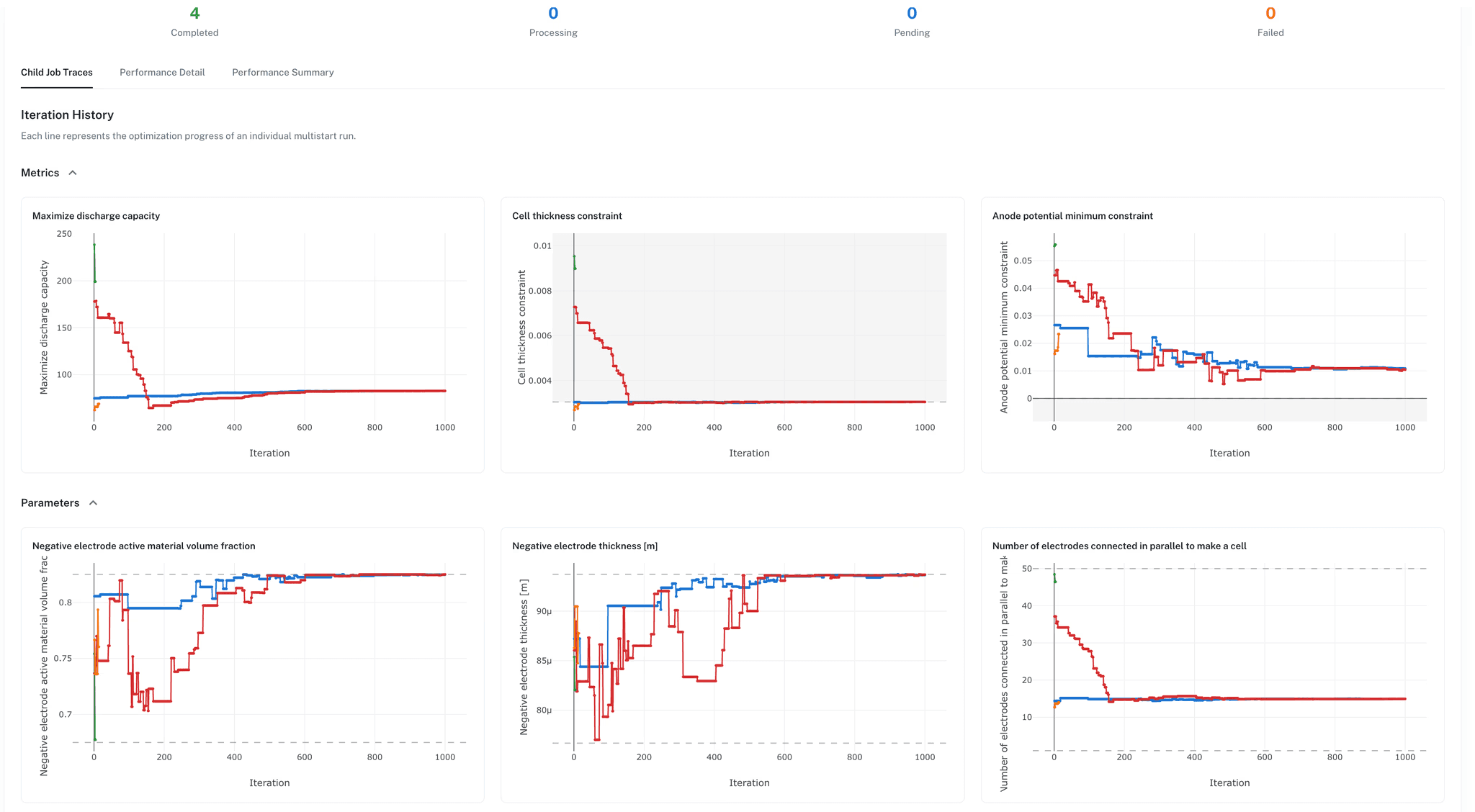
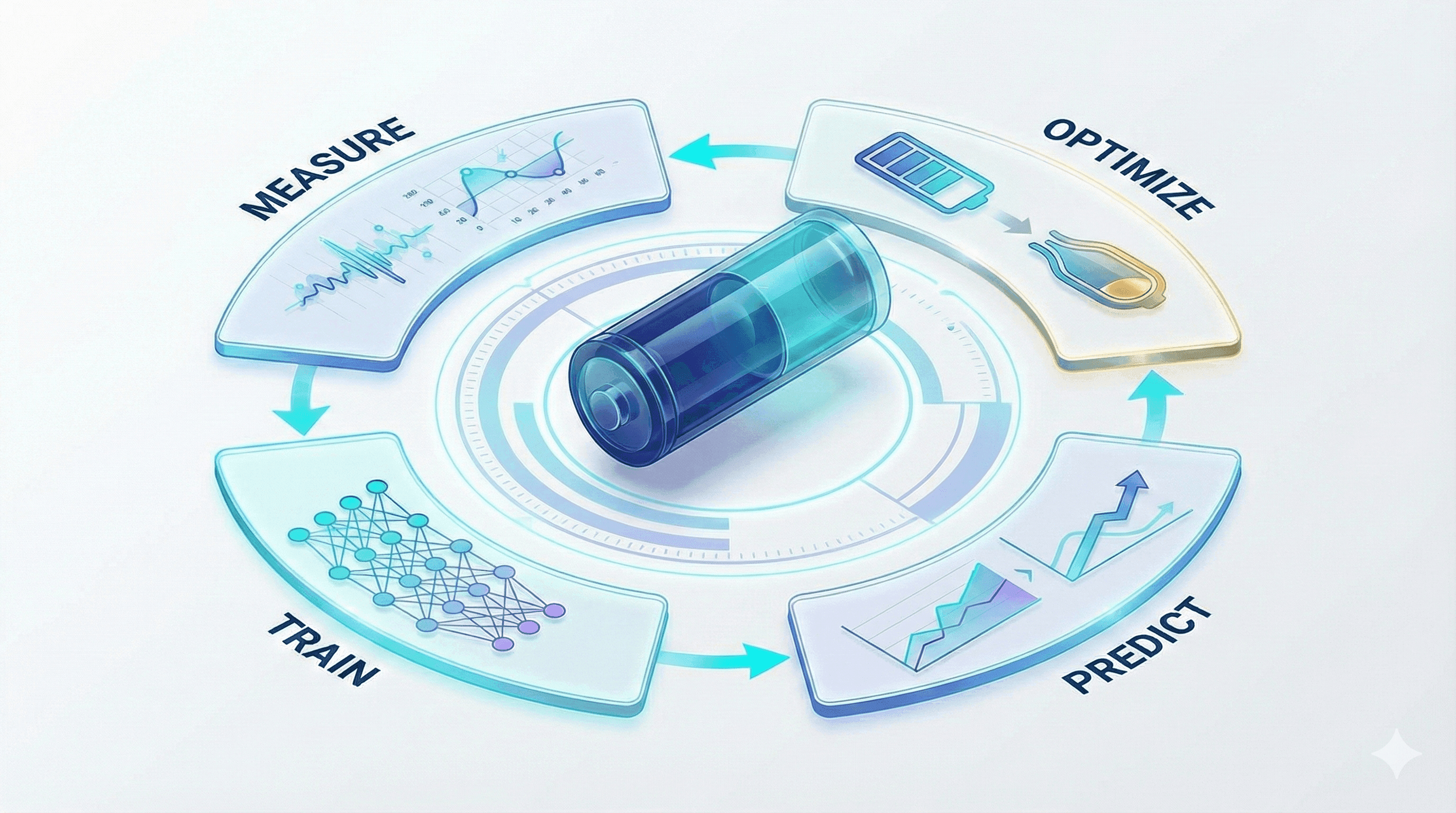
Every turn runs through the same five steps, and the answer from the last one sets up the next. Operate makes each turn shorter by taking the waiting out of the work around the test. Simulate means you need fewer of them, by answering design questions before anything is built. Both run in Ionworks Studio.
01
OperatePlan
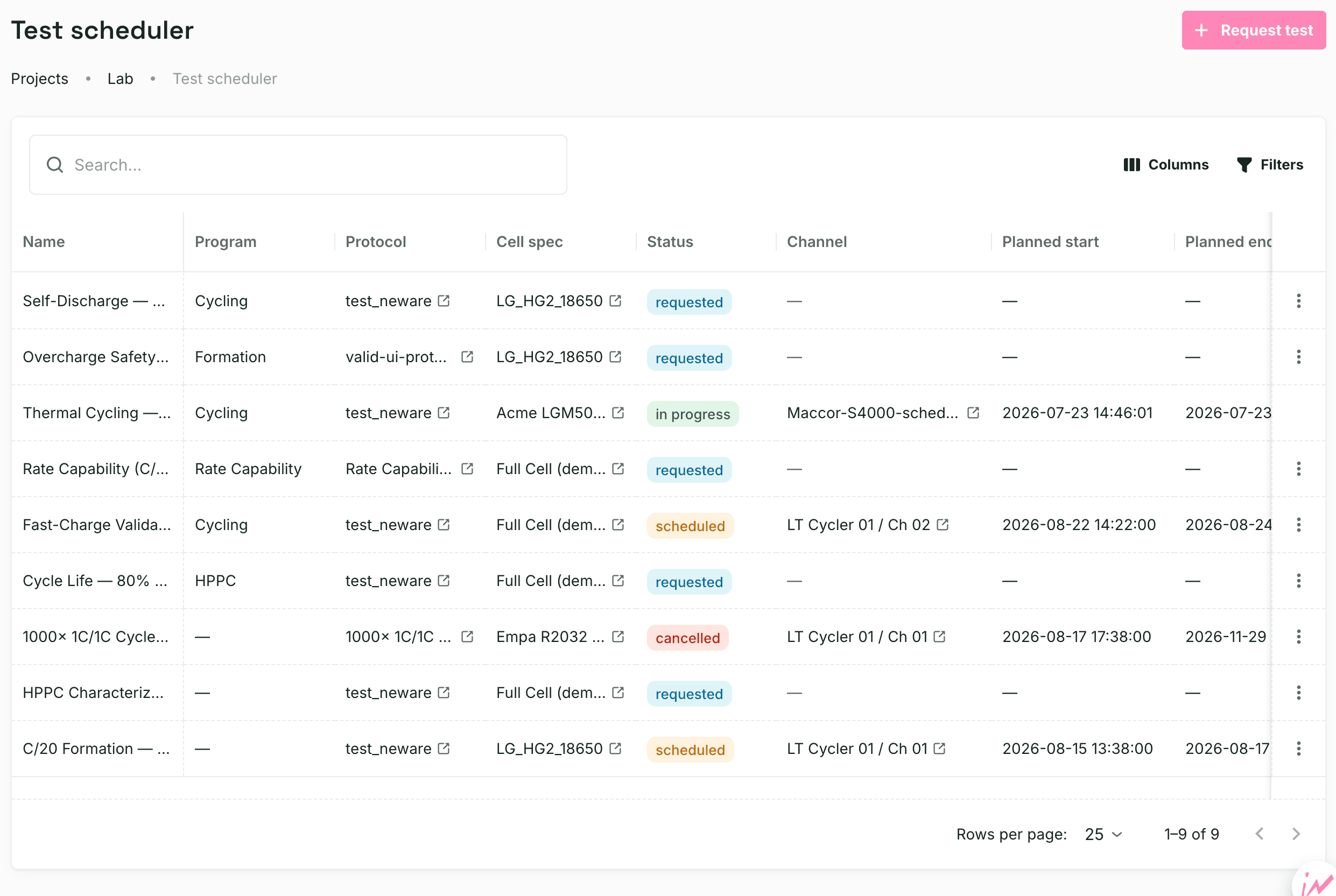
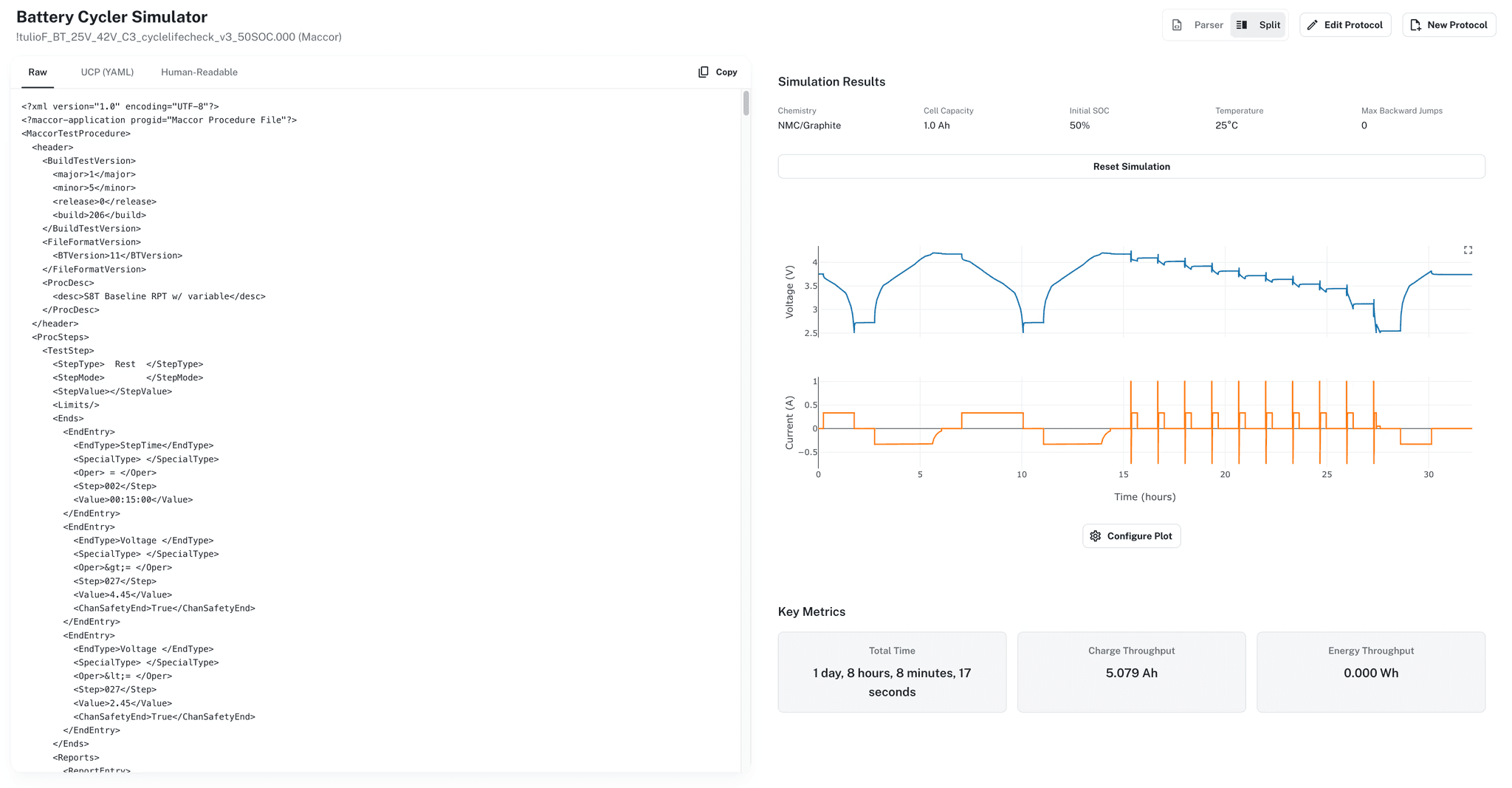
Start from the tests you already have. Describe what you need in plain English and the closest protocols in your library surface instantly, so nobody rewrites one from scratch. Each protocol is simulated before it runs, estimating duration and catching step and limit faults before a channel is occupied.
02
OperateTest
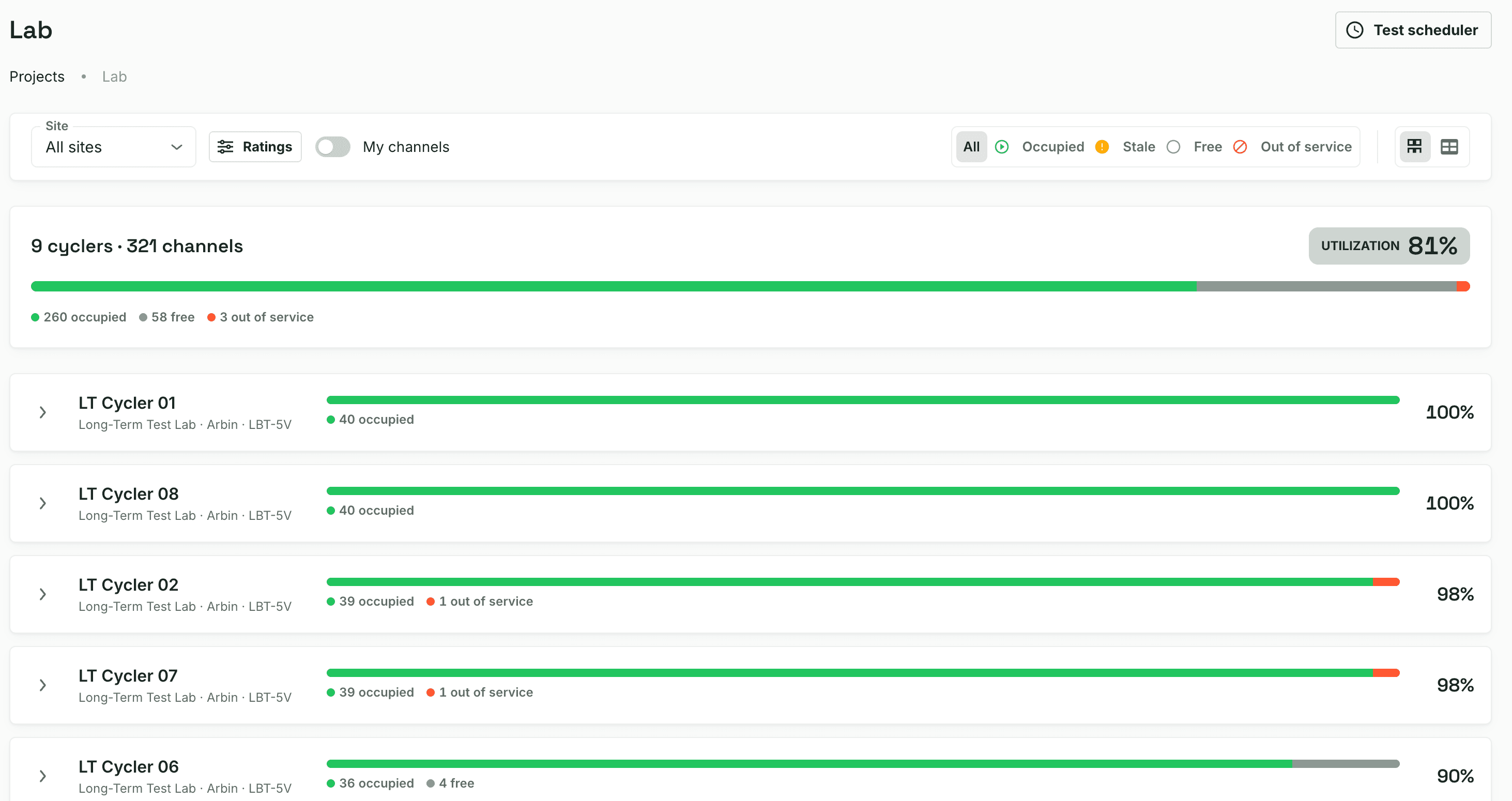
Live sync from the cyclers you already run. Every Maccor, Neware, Arbin, and BioLogic file is normalized as it lands, with no parsers to maintain, and each measurement stays linked to its cell and protocol. Metrics sync back to your LIMS.
03
SimulateTrain
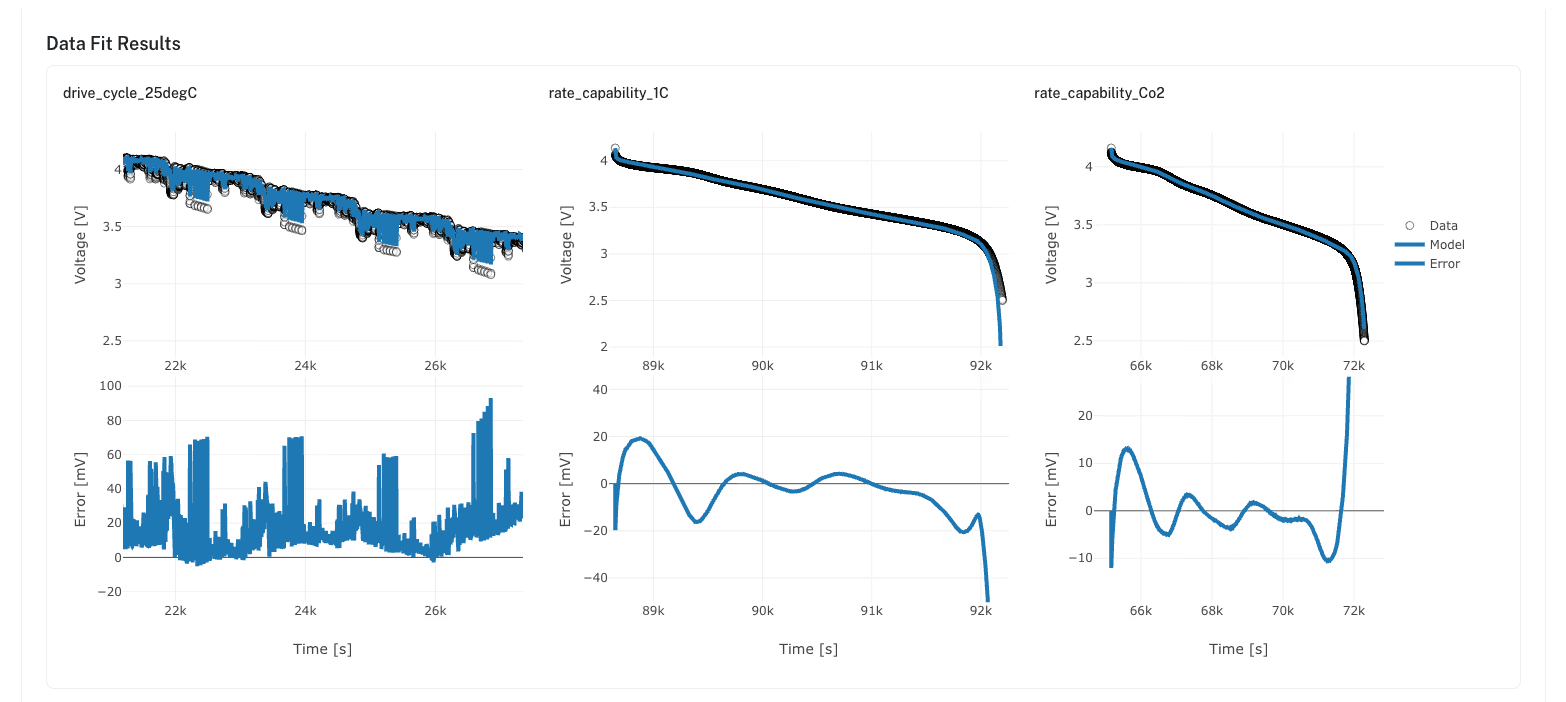
Fit physics-based models to your experimental data. Select a model type, define the parameters to estimate, and generate a parameterized model your team can trust across studies. Every cell you've ever tested becomes an asset your whole team can use.
04
SimulatePredict
Run protocol simulations against parameterized models before committing cycler time. Evaluate fast-charge strategies, assess lithium plating risk, or compare internal states across cell designs, at simulation speed, not cycler speed.
05
SimulateOptimize
Define engineering targets and search for the best design or protocol. Vary electrode thickness, porosity, loading, or charging strategy while managing degradation and plating constraints. Explore the design space without building more cells.
And the next turn starts here
Shorter turns, and fewer of them. When simulation answers a design question, that question never needs a build.
Built for your code, not just your browser
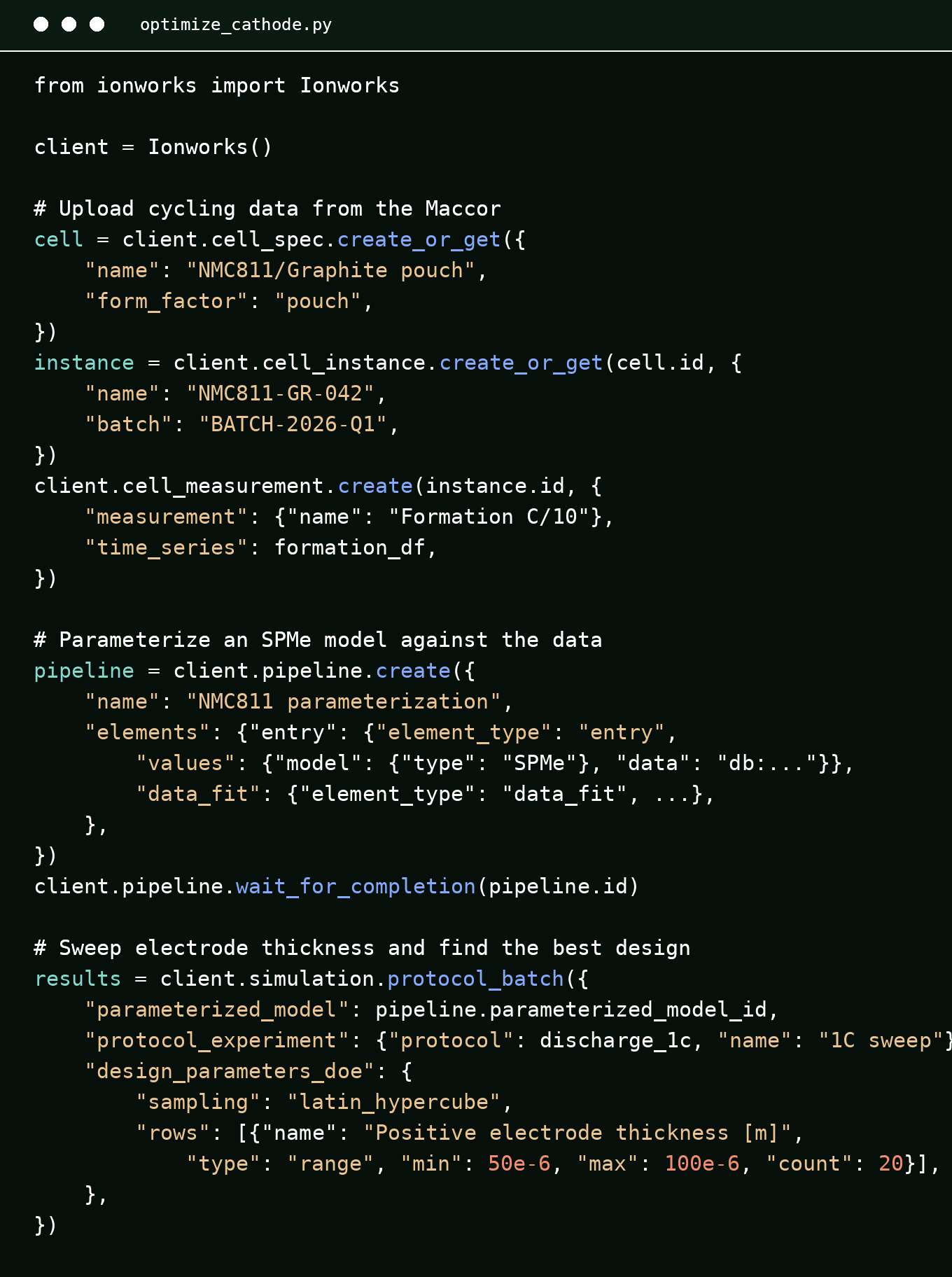
Everything in Ionworks Studio is available through the REST API and Python SDK. The same programmatic surface is what makes Ionworks work for AI agents — an automated system operates the platform through the same interface a human engineer uses. No separate "AI mode." The API was there first.
Who we work with
Every battery team hits the same wall eventually: physical testing can’t keep up with the questions their programs need answered. Simulation closes the gap, and looks different depending on the product.

Automotive OEM
Catch battery risk before tooling locks
Challenge
Cell issues found in physical validation arrive after supplier contracts and production timelines have locked around the wrong assumptions.
Ionworks in action
Cycler data feeds parameterized models for each candidate cell. Duty-cycle simulations run in parallel with the test plan, so design questions get answered in days.
Outcomes
Engineering decisions move earlier. Late-stage redesigns drop. Programs hit their gates.

Drone & Advanced Air Mobility
Push past the bench-tested envelope
Challenge
Real missions cover thermal, altitude, and load conditions no lab campaign can reproduce. Datasheets stop being useful at the boundaries.
Ionworks in action
Validated physics models extrapolate where data ends. Trade studies sweep range, safety, and lifetime against mission profiles in an afternoon, not a year of cycler time.
Outcomes
More usable flight time per cell. Defensible operating limits. Faster iteration on the airframe-pack interface.
Materials Development
Connect new chemistry to system impact
Challenge
A promising coin-cell result rarely survives the jump to a real product. Translating material gains into pack-level value takes months.
Ionworks in action
Each new dataset slots into a parameterized model. The impact of a coating change or electrolyte tweak on energy, lifetime, and safety shows up in hours.
Outcomes
Faster down-selection between candidate chemistries. Quantified value for partners. Fewer prototype builds before commercial conversations.

Consumer Electronics
De-risk launches without slowing them
Challenge
Battery surprises tend to surface near the end of a product cycle, when the cost of change is highest and the launch window is fixed.
Ionworks in action
One system of record tracks every cell variant, charging profile, and aging assumption. Models predict behavior under realistic usage instead of waiting for survey data.
Outcomes
Predictable performance at launch. Smaller late-cycle scope changes. More design freedom for the product team.
Frequently asked questions
Wait for the chemistry. Nothing else.
Every step of the loop that isn't the cell can be shortened: planning the test, getting the data out, and deciding what to build next. See Operate and Simulate run on your own cycler data.